

Your most important health document isn’t stored in your doctor’s filing cabinet or on a hospital’s password-protected server. It’s your story—a detailed narrative of your body, your treatments, and your journey through the healthcare system. And according to federal law, it belongs to you.
Many patients operate under a misconception that their medical records are proprietary information held by hospitals and clinics. In reality, you have a fundamental right to access, review, and obtain copies of your health information. Understanding and exercising this right is one of the most powerful steps you can take to become an active participant in your care.
The Legal Backbone: HIPAA’s Right of Access
The Health Insurance Portability and Accountability Act (HIPAA) isn’t just about privacy notices—it grants you a specific, enforceable Right of Access. Under this rule (45 CFR § 164.524), you have the right to:
· See and get a copy of your health records held by most healthcare providers, hospitals, and health plans.
· Receive your records in a timely manner (generally within 30 days of your request).
· Have your records sent to a third party (like another doctor or a health app) of your choice.
· Request corrections if you find errors.
Who must comply? Nearly all healthcare providers (doctors, dentists, psychologists, chiropractors), hospitals, clinics, nursing homes, and health insurance plans. There are very few, narrow exceptions, such as psychotherapy notes kept separate from the main record.

Why You Should Access Your Records: Beyond “Just Knowing”
Obtaining your records isn’t an act of distrust; it’s an act of empowerment. Here’s what you gain:
1. Become the Expert on Your Own Health: Your record contains the full picture—lab results, imaging reports, specialist notes, and medication lists. Seeing this information helps you understand your conditions and treatment plans more fully than a brief conversation might allow.
2. Spot and Prevent Errors: Medical records can contain mistakes—outdated allergies, incorrect medication dosages, or misreported symptoms. A Johns Hopkins study suggested medical errors are the third leading cause of death in the U.S. Reviewing your record is a critical line of defense.
3. Improve Care Coordination: When seeing a new specialist or getting a second opinion, providing your complete records saves time, reduces duplicate testing, and gives the new provider essential context.
4. Advocate More Effectively: Armed with your actual data, you can ask more informed questions. Instead of “What did my tests show?” you can say, “I see my hemoglobin A1C is 6.8%. What does that mean for my diabetes management plan?”
5. Prepare for the Future: Your records are essential for applications for disability benefits, life insurance, or for personal injury and malpractice cases. Having them organized can be invaluable.
The Practical Guide: How to Request Your Records
Accessing your records is a straightforward process. Follow these steps to ensure a smooth request.
Step 1: Identify the “Custodian”
Determine which organization holds the records you need. Each provider or facility keeps its own records. You’ll need to submit a separate request to your primary care doctor’s office, the hospital where you had surgery, and the lab that did your blood work.
Step 2: Submit a Formal Request
While some providers offer patient portals for limited access, a formal written request is best for obtaining a complete copy. Most organizations have a standard form, but a letter is equally valid.
What to Include in Your Request:
· Your full name, date of birth, and contact information.
· A clear statement: “I am requesting a copy of my complete medical record.”
· Specific details, if applicable (e.g., “Records from January 2020 to present,” or “Surgical notes and pathology report from my procedure on April 15, 2023”).
· How you want to receive the records (paper copy, CD, USB drive, or secure digital transfer).
· Your signature and the date.
Sample Request Language:
“Pursuant to my right under HIPAA and 45 CFR § 164.524, I hereby request access to and a copy of my complete medical records maintained by your office. Please include all notes, lab and test results, imaging reports, medication lists, and billing records from [Start Date] to [End Date]. I authorize the records to be sent to [Your Address/Email].”
Step 3: Know the Rules and Timelines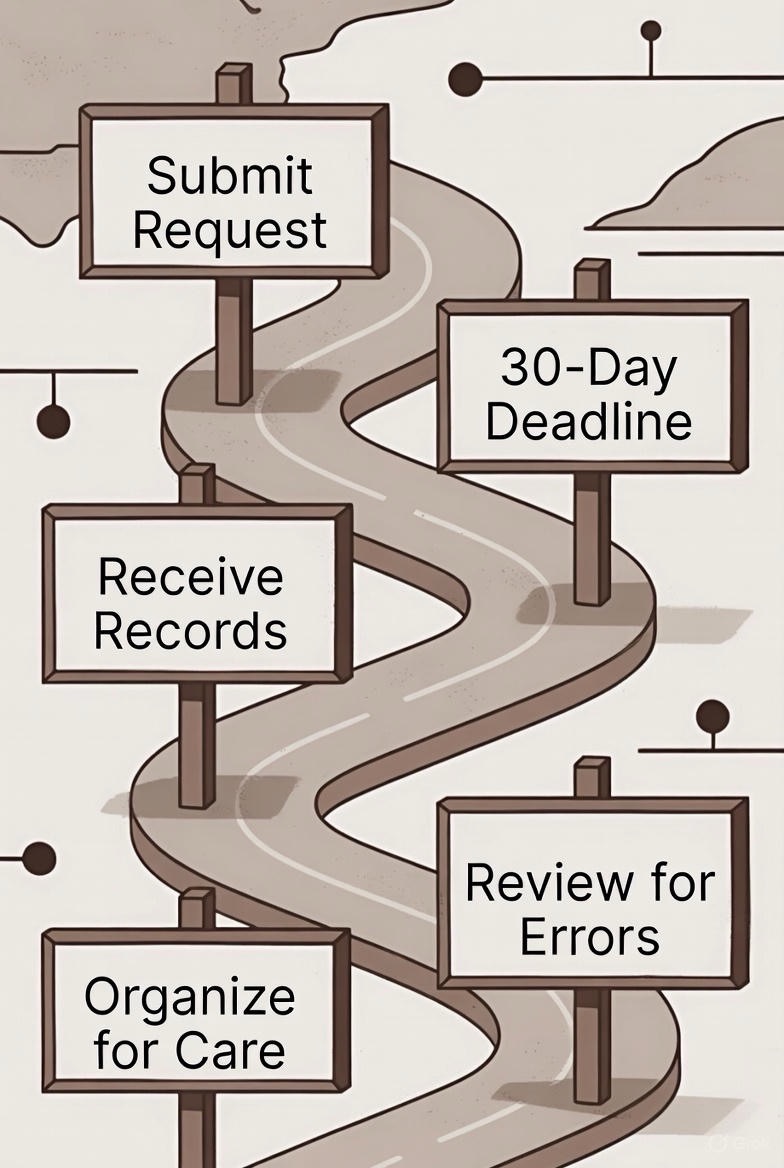
· Timeframe: Providers have 30 days to respond to your request. They can extend this by 30 more days with written notice, but they must provide a reason.
· Fees: They can charge a reasonable, cost-based fee for copying and supplies (like a CD or USB drive). They cannot charge you for the time it takes to locate the records or for sending them to another provider you’ve designated. They also cannot charge you if you simply want to view your records in person. If a fee seems excessive, ask for an itemized breakdown.
· Format: You have the right to receive your records in the format you request if they are readily producible in that form. If not, you must agree to an alternative format.
Step 4: Review and Organize
When you receive your records:
· Create a system: Use a binder, a secure digital folder, or a dedicated patient app.
· Check for accuracy: Look for wrong personal information, outdated history, and test results that don’t match what you were told.
· Highlight what you don’t understand: Bring these items to your next appointment for clarification.
What If You’re Denied?
A provider can only deny access in very specific situations, such as if they believe access could endanger the life or safety of the patient or another person. They must provide the denial in writing, with a reason, and explain your right to file a complaint.
If you believe your right of access has been violated:
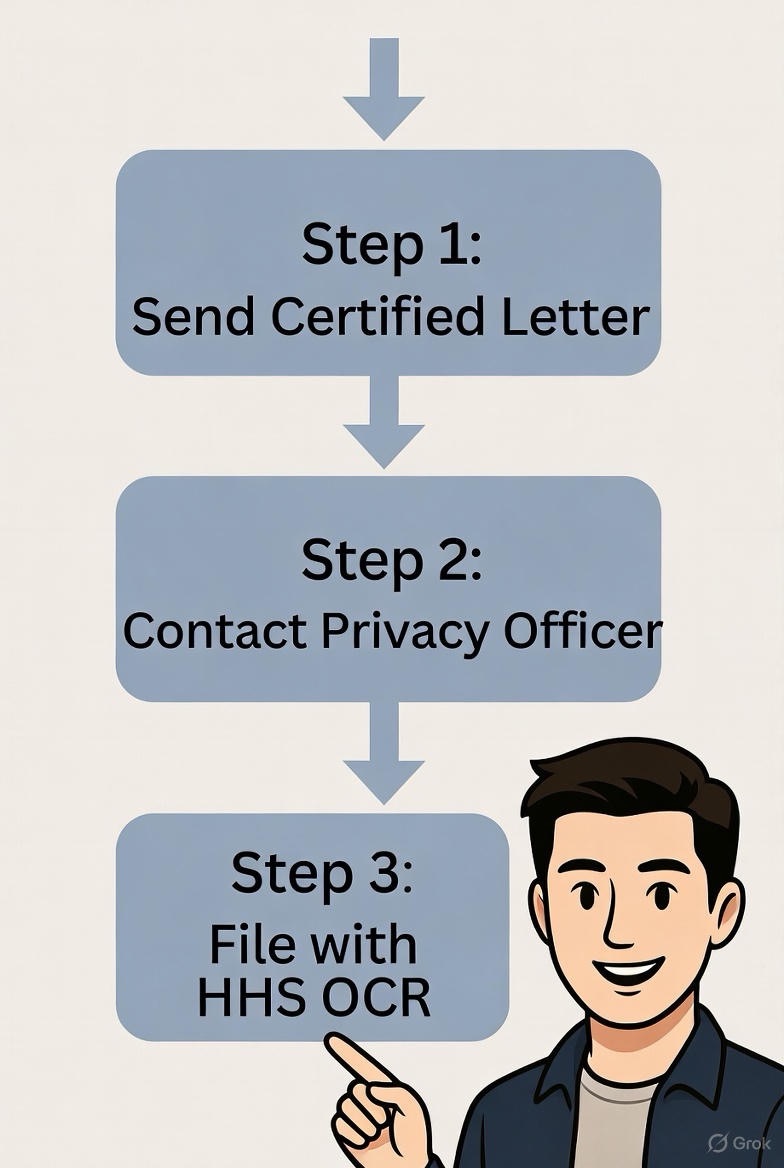
1. File a complaint directly with the provider’s privacy officer.
2. If unresolved, file a formal complaint with the U.S. Department of Health and Human Services (HHS) Office for Civil Rights (OCR) online at hhs.gov/ocr.
Your medical record is the cornerstone of your health story. By law, it is yours to access, own, and understand. Taking this step transforms you from a passive recipient of care into an informed, empowered partner—the most important member of your own healthcare team. Start your request today.
FAQs
Q1: How long does it take to get my records, and why does it take so long?
A: By federal law (HIPAA), healthcare providers have 30 calendar days to respond to your request. They can extend this by another 30 days if they provide a written reason. While this may seem long, legitimate delays can include:
· Retrieving records from archives or off-site storage
· Compiling records from multiple departments or systems
· Redacting third-party information (like notes about family members)
· Legal review in complex cases
Pro tip: Always ask for an estimated timeline when you submit your request and get the contact information of the specific person handling it.
Q2: Can I be charged for my medical records? How much is reasonable?
A: Yes, but fees are regulated:
· Per-page fees: Typically $0.25 to $0.75 per page for paper copies, with caps in many states.
· Flat fees: Often $25-$75 for electronic copies on CD or USB.
· Labor fees: Can be charged for clerical time (usually $15-$25 per hour) after the first hour in some states.
· Postage: You can be charged for actual shipping costs.
What’s NOT allowed:
· Charging for searching or retrieving records
· Charging for simply viewing your records in person
· Charging if you’re sending records directly to another provider for continuity of care
Always ask for a fee estimate upfront and check your state’s specific laws, as some have stricter limits than HIPAA.
Q3: What can I do if there’s an error in my medical record?
A: You have the right to request an amendment. Here’s the process:
1. Submit a written request to the provider’s health information management department, specifying the exact error and what should be corrected.
2. Provide supporting documentation if available (like a lab report from another facility).
3. The provider has 60 days to respond. They can:
· Accept and make the correction
· Deny your request with a written explanation
4. If denied: You have the right to file a written “statement of disagreement” that must be included with your record forever.
5. Notify other providers who received the incorrect information if the error is serious.
Q4: What’s the difference between a “patient portal” and my complete medical record?
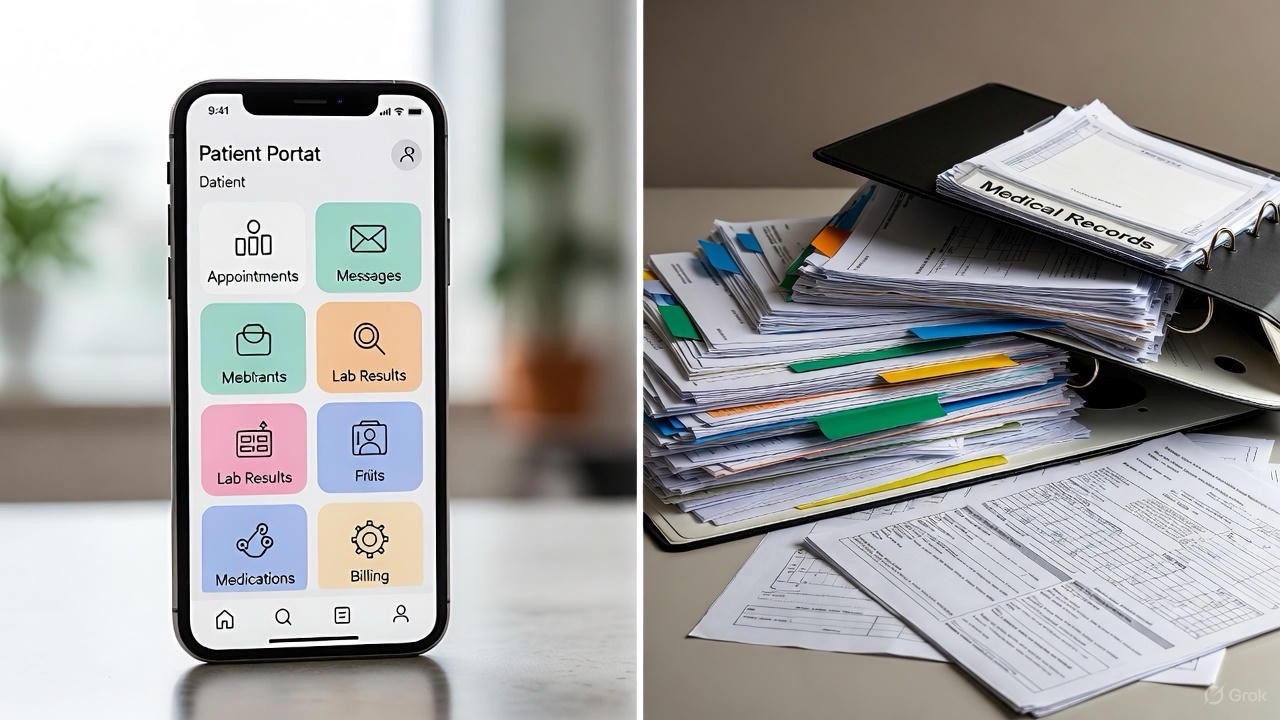
A: This is a crucial distinction:
· Patient Portal: Usually shows summary information—recent visit notes, some lab results, current medications, and upcoming appointments. It’s curated and limited.
· Complete Medical Record: Includes everything: all physician and nurse notes (including informal ones), detailed lab and imaging reports, consent forms, billing information, internal communications, and sometimes even correctional notes.
Important: Always request your complete record periodically, even if you regularly use a portal.
Q5: Can my family member access my records?
A: Only with proper authorization:
· Written consent: You must complete a HIPAA release form specifically naming the person and what records they can access.
· Healthcare power of attorney: If you’ve designated someone as your healthcare agent, they can access records when you’re unable to make decisions.
· Parents/guardians: Generally can access records for minor children (with some exceptions for sensitive services like reproductive health, depending on state laws).
· In an emergency: Providers may share information with family involved in your care if it’s in your best interest.
Q6: What if my doctor refuses to give me my records or ignores my request?
A: This is a HIPAA violation. Take these steps:
1. Send a certified letter with your request, citing “HIPAA Right of Access, 45 CFR § 164.524.”
2. Contact the provider’s privacy officer or patient advocate.
3. File a complaint with the U.S. Department of Health and Human Services Office for Civil Rights (OCR) at hhs.gov/ocr.
4. Contact your state’s medical board or health department—state laws may provide additional protections.
The OCR actively investigates access complaints and has levied significant fines against providers who deny records.
Q7: Do mental health or therapy notes have special rules?
A: Yes. Psychotherapy notes (a therapist’s personal notes separate from the medical record) have special protection:
· They are not part of your general medical record
· You do not have an automatic right to access them under HIPAA
· Your therapist may choose to share them, but can deny access if they believe it could harm you
However, your medical record from a mental health provider (diagnosis, treatment plan, medications, progress summaries) is accessible to you.
Q8: How far back can I request records?
A: It depends on state laws:
· Most states require providers to keep records for 7-10 years from the last date of service (longer for minors).
· Hospitals often keep records indefinitely.
· Best practice: Request records sooner rather than later. Even if providers are required to keep records, retrieving very old records may be difficult or impossible if they’ve been destroyed or stored in outdated formats.
Q9: What format can I request (paper, digital, etc.)?

A: You can request your records in your preferred format if the provider can “readily produce” them that way. Options include:
· Paper copies
· Electronic copies on CD, DVD, or USB drive
· Access through a secure patient portal
· Email (though security concerns may limit this)
· Fax (increasingly rare)
If they cannot provide your preferred format, they must work with you to find an acceptable alternative.
Q10: Can I get records from a provider who has retired or a facility that closed?
A: This can be challenging but not impossible:
· Contact the local medical society or state licensing board—they often know where records were transferred.
· Check with other local providers in the same specialty—they may have absorbed the practice.
· For hospitals that closed, contact the state health department for information.
· If the practice was part of a larger healthcare system, contact their corporate health information management department.
Q11: What’s the best way to organize my records once I get them?
A: Create a personal health record (PHR):
1. Chronological order: Start with the most recent records on top.
2. Tab by category: Lab results, imaging reports, visit summaries, surgical records.
3. Create a master summary: One-page list of medications, allergies, conditions, and major procedures.
4. Go digital: Use a secure scanner app on your phone to create digital backups. Consider encrypted cloud storage or a dedicated health app (like Apple Health or a patient portal aggregator).
5. Share strategically: Give copies to your primary care provider and trusted family members.

Q12: Are there any records I CAN’T access?
A: Very few, but exceptions include:
· Information compiled for legal proceedings (like malpractice case preparation)
· Psychotherapy notes (as noted above)
· Information that could endanger someone’s life or safety (rarely invoked, requires specific justification)
· Records not covered by HIPAA (like employment records held by your employer’s occupational health clinic)
Remember: When in doubt, submit the request. The provider must justify any denial in writing, and you have appeal rights. Your medical narrative belongs to you—accessing it is the first step toward truly collaborative care.