

Have you ever left a doctor’s appointment with a nagging sense of uncertainty? Maybe the diagnosis felt vague, the proposed treatment seemed extreme, or you simply wanted the reassurance that all options were explored. If so, you’ve likely wondered about a second opinion—but perhaps hesitated, worried about offending your doctor or seeming like a “difficult” patient.
It’s time to reframe that thought. In modern healthcare, seeking a second opinion isn’t a sign of mistrust; it’s a hallmark of an engaged, proactive patient. The most complex systems—from engines to legal cases—benefit from a second look. Your health, the most complex system of all, deserves no less.
This guide will help you understand when a second opinion is not just appropriate but advisable, and how to navigate the process with confidence and tact.

Why a Second Opinion is Smart Medicine, Not a Slight
Medicine is both a science and an art. Different specialists have varying experiences, training, and approaches. A second opinion can:
· Confirm a diagnosis and treatment plan, giving you peace of mind.
· Offer alternative diagnoses or treatments you haven’t yet considered.
· Provide access to newer, specialist-driven procedures or clinical trials.
· Clarify complex information by hearing it explained another way.
Think of it as due diligence for your health. No ethical physician will be offended by a patient seeking clarity and confidence.
When to Seriously Consider a Second Opinion
Trust your instincts. If something feels “off” or you have persistent doubts, that’s reason enough. More specific triggers include:
1. A Major Diagnosis: For serious, life-altering, or chronic conditions (e.g., cancer, heart disease requiring surgery, autoimmune disorders, a major mental health diagnosis).
2. Recommended Invasive Treatment: When surgery, a major procedure, or a treatment with significant side effects is proposed.
3. Unclear or Vague Diagnosis: If you’re told “it’s probably” or “it might be” without a clear path to confirmation.
4. Lack of Improvement: If you’re following a treatment plan but not getting better.
5. Rare or Complex Conditions: Where specialist expertise is crucial.
6. When You Feel Unheard or Rushed: If your questions aren’t being answered or your concerns are minimized.
7. Conflicting Information: If your own research (from reputable sources) consistently contradicts what you’re hearing.

The Step-by-Step Guide to Getting a Second Opinion
Step 1: Talk to Your Current Doctor (The Right Way)
This is the most important step for maintaining a good relationship. The goal is to frame the request as a collaborative pursuit of the best outcome, not a rejection.
Use This Tactful Script:
“Dr. [Name], I really appreciate all the time and care you’ve given me. To feel completely confident and at peace moving forward, I would like to seek a second opinion. Could you help me with that? I value our relationship and want to continue working with you after.”
Why this works: It’s respectful, states your need for confidence (not doubt in them), and explicitly invites them to be part of the process. Most doctors will readily agree and may even recommend a colleague.
Step 2: Get Your Records Organized
A meaningful second opinion requires complete information. You have a legal right to your records.
· Request: All relevant test results (labs, biopsies, imaging CDs), clinic notes, and the proposed treatment plan from your current provider.
· Use Your Patient Portal: Download available documents.
· Make a Timeline: Write down a brief history of your symptoms and treatments.
Step 3: Choose the Right Second-Opinion Provider
· Ask for Referrals: From your primary doctor, another trusted healthcare professional, or a patient support group for your condition.
· Research: Look for specialists at major academic medical centers or dedicated institutes for your condition. Check credentials and experience.
· Verify Insurance: Contact the new provider’s office and your insurance company to confirm coverage. Most plans cover second opinions, especially for major procedures.
Step 4: Prepare for the Appointment
Treat this like your first consultation, but with the advantage of having your records.
· Bring all your organized documents.
· Prepare a new list of questions focused on understanding the why behind any similarities or differences from the first opinion.
· Key questions to ask:
· “Do you agree with the initial diagnosis? If not, why?”
· “What are all the treatment options available, including newer or less invasive ones?”
· “What is your recommended approach and why?”
· “What are the success rates, risks, and long-term outcomes here?”
· “If this were your family member, what would you recommend?”
Step 5: Integrate the Information and Decide
After the second opinion, you may have:
· Clear confirmation, which builds confidence to proceed.
· A different perspective, offering new options to weigh.
· A need for a third opinion, if the first two strongly disagree.
Schedule a follow-up with your original doctor to discuss what you learned. This closes the loop and allows them to address any new questions.

What If Your Doctor Reacts Poorly?
A negative reaction is a red flag, but stay calm. Reiterate your stance calmly:
“I understand this is a partnership. My decision to get a second opinion is about my comfort level with a major health decision. I hope we can discuss the findings together once I have them.”
A professional, patient-centered doctor will respect this. If they become hostile or refuse to provide records, it validates your decision to seek care elsewhere.
The Bottom Line: You Are the CEO of Your Health
Your doctors are invaluable consultants, but you are the ultimate decision-maker. Seeking a second opinion normalizes your active role in your care. It transforms anxiety into empowerment, uncertainty into a clear path forward.
Give yourself permission to seek clarity. Your health—and your peace of mind—are worth the extra step.
FAQs
Q1: Will my doctor be offended if I ask for a second opinion?
A: A professional, confident doctor should not be offended. Most quality physicians view it as a normal part of complex care and a patient’s right to be fully informed. How you frame the request matters significantly. Using language like “I want to feel completely confident before moving forward” or “I’d like to explore all options” positions it as about your peace of mind, not a challenge to their competence. If a doctor does react negatively, consider it a red flag about their patient-centered approach.
Q2: How do I tell my doctor I want a second opinion without damaging our relationship?
A: Use the “Partnership & Peace of Mind” script:
“Dr. [Name], I really value your expertise and our relationship. This is a big decision for me, and to have complete peace of mind and confidence, I think it would be helpful for me to get a second opinion. Could you recommend a specialist you respect, or help me get my records to someone?”
This approach shows respect, frames it as about your emotional readiness (not their skills), and keeps them involved. Most will appreciate your proactive approach to your own care.
Q3: Will my insurance cover a second opinion?
A: Most often, yes—especially for major diagnoses or elective surgeries. However, you must check:
1. Your specific plan: Call your insurance company and ask: “Does my plan cover a second opinion for [specific condition/procedure]? Are there any network restrictions or pre-authorization requirements?”
2. In-Network Providers: The second-opinion doctor should typically be in-network to minimize costs. Your first doctor can often recommend an in-network specialist.
3. Medicare/Medicaid: Generally cover second opinions for medically necessary surgery. Medicare Part B even covers a third opinion if the first two differ.
Always verify coverage before the appointment to avoid surprise bills.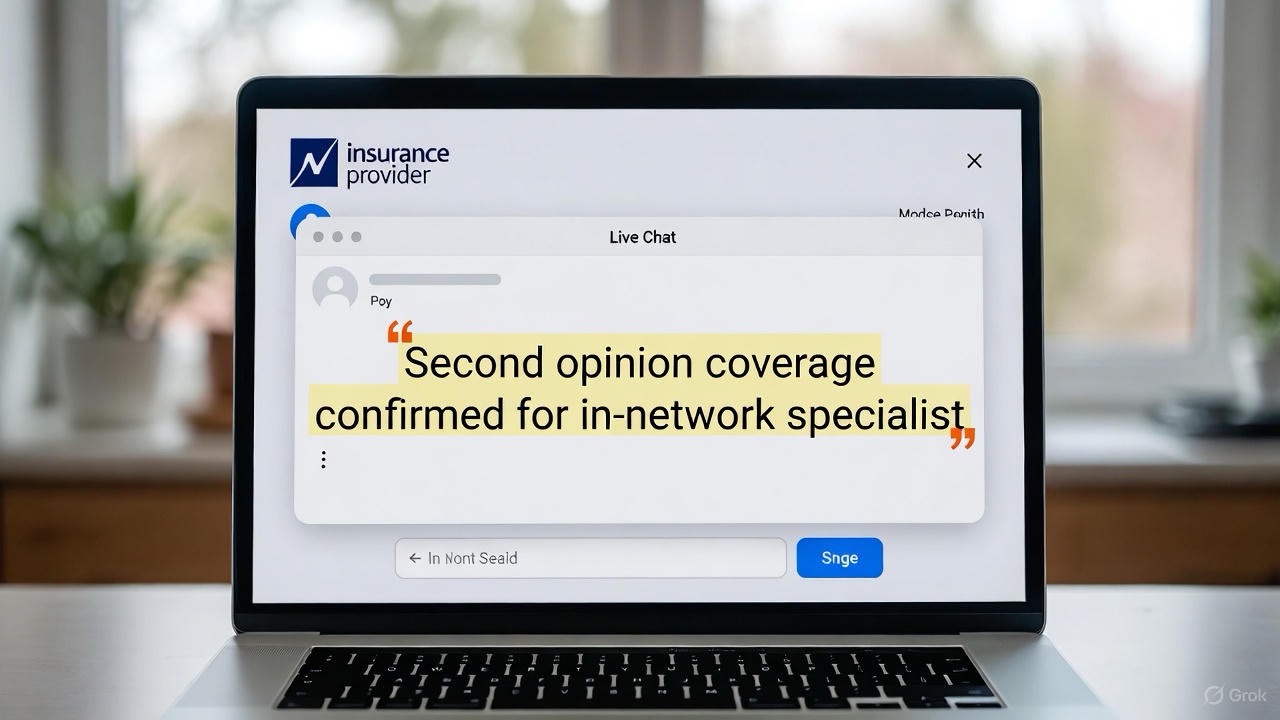
Q4: What if the two opinions completely contradict each other?
A: This is challenging but not uncommon. Your next steps should be:
· Seek a Third Opinion: Go to a major academic medical center or a recognized expert in the specific condition. Present both previous opinions and ask them to help you navigate the discrepancy.
· Request a Tumor Board or Case Conference: For complex cases like cancer, ask if your case can be reviewed by a multidisciplinary team of specialists who debate the best approach together.
· Focus on the “Why”: Don’t just ask “what,” ask “why.” “Doctor B, why do you recommend surveillance while Doctor A recommends surgery? What in my specific case leads you to that conclusion?” Understanding the reasoning is key.
· Consider a Patient Advocate: Organizations like The Patient Advocate Foundation can help you navigate conflicting medical advice.
Q5: Do I need to get a second opinion for every diagnosis or prescription?
A: No. Reserve second opinions for high-stakes situations. Use this rule of thumb: Seek a second opinion when the decision is life-altering, involves significant risk, is irreversible, or when you have persistent doubts despite clear explanations. A new blood pressure medication? Probably not. A recommendation for major heart surgery, a cancer treatment plan, or a diagnosis of a rare autoimmune disease? Yes.
Q6: How do I choose who to see for the second opinion?
A: Follow this hierarchy for best results:
1. Ask your first doctor for a referral to a respected peer. This often yields the most collegial and collaborative path.
2. Seek a specialist at an academic/university hospital known for your condition. They often see more complex cases and have access to the latest clinical trials.
3. Research via reputable medical societies (e.g., American College of Surgeons, American Cancer Society’s “Find an Oncologist” tool).
4. Look for a doctor with a different sub-specialty focus (e.g., if first opinion is from a surgeon, seek a medical oncologist or radiation oncologist for a cancer opinion to explore non-surgical options).

Q7: Should I get the second opinion without telling my first doctor?
A: It’s strongly recommended to inform your doctor. Here’s why:
· Continuity of Care: Your doctor needs the full picture to coordinate your care effectively.
· Record Access: They can facilitate sending your complete records, which is crucial for a meaningful second opinion.
· Avoiding Duplicate Testing: They can advise on what tests the new doctor will need.
· Relationship: Going “behind their back” can damage trust if they find out later. Transparency builds a stronger partnership.

Q8: What specific records do I need to bring to the second opinion appointment?
A: Do not assume records will be sent automatically. Bring a complete packet:
· All imaging on CD/DVD (MRI, CT, X-ray scans—NOT just the reports).
· Pathology slides and reports (for any biopsies—this is critical for cancer diagnoses).
· All lab results.
· Clinical notes from your first doctor detailing the diagnosis and recommended plan.
· Your own concise timeline of symptoms and treatments tried.
· A list of your current medications and allergies.
Q9: What if the second opinion says the first doctor was wrong?
A: Handle this situation with grace and focus on your health forward:
· Do not confront the first doctor angrily. Thank them for their initial care.
· Schedule a brief follow-up to inform them of your decision to pursue a different path, citing the second opinion. You can say, “After thorough consideration and additional consultation, I’ve decided to move forward with the alternative treatment plan. I appreciate your help getting me to this point.”
· Formally transfer your care by signing records release forms to your new provider.
· If there was a serious error, you can file a report with the hospital’s patient relations department or the state medical board after your care is stabilized.
Q10: How long does the second opinion process typically take?
A: Budget 3-8 weeks from decision to having integrated information:
· 1-2 weeks: To get records compiled and sent.
· 2-4 weeks: To get an appointment with a sought-after specialist.
· 1-2 weeks: To follow up with your original doctor to discuss findings.
For urgent conditions (like aggressive cancers), centers often expedite. Be clear when scheduling: “I need a second opinion for a newly diagnosed [condition] and need an appointment as soon as possible.”

Q11: Can I get a second opinion virtually or online?
A: Yes, telehealth second opinions are increasingly common and valuable, especially for rare conditions or accessing top-tier institutions. Many major hospitals (Cleveland Clinic, Mayo Clinic, Johns Hopkins) offer formal “remote second opinion” programs where their specialists review your records and provide a written report and/or video consultation. Verify insurance coverage for these specific programs.
Q12: I’m afraid of “wasting” a specialist’s time. Is this a valid concern?
A: No. Seeking clarity on a major health decision is never a waste of a specialist’s time. It is a core part of their job. They are being paid (by you or your insurance) for their consultative expertise. What would be a poor use of time is proceeding with a major treatment while harboring unresolved doubts that could affect your compliance and outcome. A confident specialist will welcome the opportunity to provide their perspective.
Remember, in healthcare, two minds are often better than one. Your advocacy in seeking a second opinion is a sign of strength, not indecision.